Parents searching for a program for misbehaved kids are usually not sitting at the kitchen table thinking, You know what would really turn this whole thing around? A broom.
Usually, they are exhausted.
They are worried about anger, defiance, depression, screen addiction, dishonesty, school failure, disrespect, isolation, or a son who seems to be drifting farther and farther from the boy they know is still in there somewhere.
They may search for a boot camp for troubled kids, a youth group home, or one of many therapeutic boarding schools because something at home has stopped working. The arguments keep coming. The consequences do not seem to matter. The lectures bounce off the walls and return, slightly bruised, to the sender.
And yet, at Whetstone Boys Ranch, one of the quietest tools for change is also one of the oldest:
Chores.
Not glamorous. Not flashy. Not likely to get its own slow-motion inspirational movie trailer.
But powerful.
Because in a therapeutic setting, chores are not just about clean floors. They are about character.
The Small Things Are Never Just Small Things 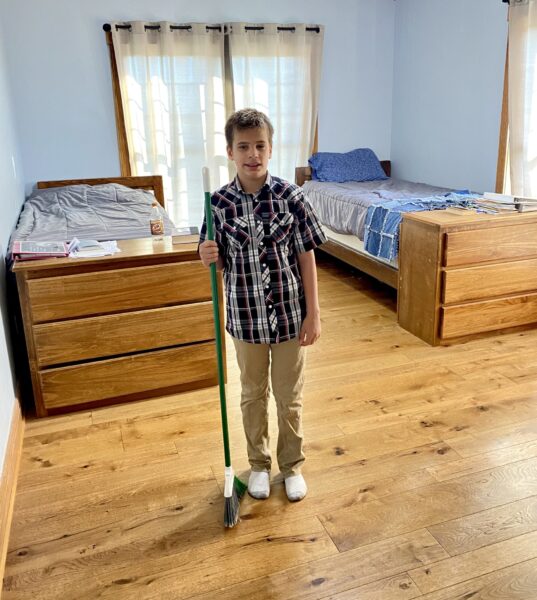
At Whetstone, boys live in a structured, relational environment where daily routines matter. The goal is not merely behavior management. The goal is restoration, responsibility, and the sharpening of young men.
That means the small things are never merely small.
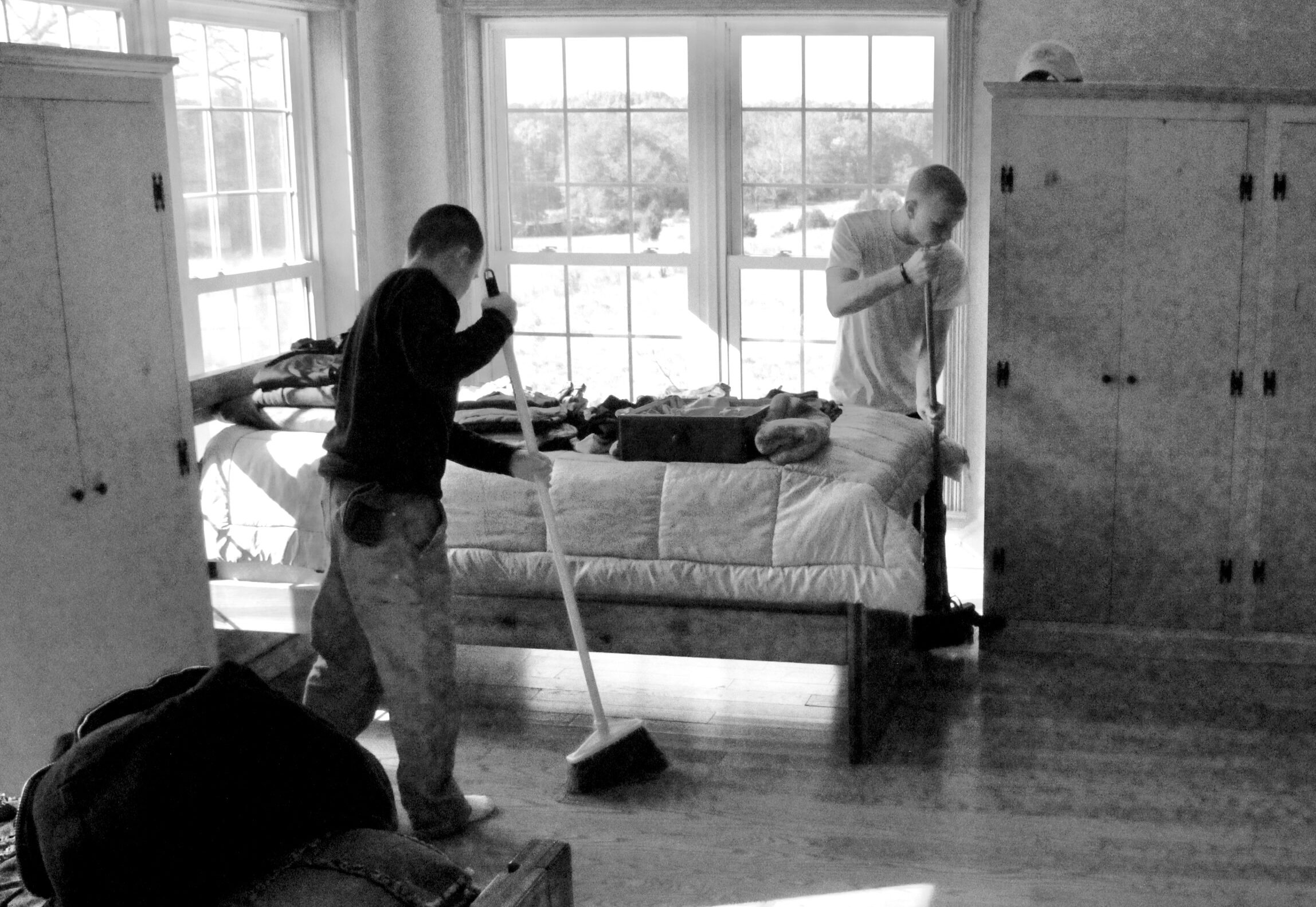
A swept floor is not just a swept floor. It is a boy learning to see what needs to be done and do it.
A made bed is not just a made bed. It is a small act of order at the beginning of the day.
A clean table after dinner is not just a clean table. It is a boy learning that other people will need this space after him.
A dishwasher unloaded without grumbling – well, let’s not get greedy. But when it happens, angels may strike up the chorus.
Parents often come to us looking for a boarding school for troubled boys because their son needs more than a consequence chart on the refrigerator. He needs a full environment of structure, accountability, therapy, mentorship, and daily practice. Chores provide that daily practice in miniature.
They create repetition. Repetition creates habits. Habits reveal character. Character, by God’s grace, can be sharpened.
Why Chores Belong in a Therapeutic Boarding School
Some boys arrive at Whetstone having never learned basic life skills. Others know what to do but have spent years resisting it. Some are capable but careless. Some are careless because they are angry. Some are angry because they are afraid. Some are afraid because their lives have been more chaotic than they know how to explain.
This is why a therapeutic boarding school cannot treat behavior as if behavior is the whole story.
At Whetstone, chores are connected to the deeper work of growth. Boys are expected to sweep, clean, organize, wash dishes, care for common spaces, keep their rooms in order, participate in work projects, and contribute to the life of the house. These expectations are not random. They are part of a structured rhythm where boys learn responsibility through real, repeated action.
You can tell a boy to be responsible.
Or you can ask him to clean the bathroom after breakfast.
One is a concept. The other is a proving ground.
The second one smells slightly worse, but it tends to be more useful.
Chores Teach Stewardship
One of the central lessons of chores is stewardship.
Things last longer when we take care of them. Plates, tools, furniture, vehicles, buildings, animals, friendships, families, marriages, opportunities – all of them require attention. Leave anything alone long enough, and disorder begins to grow. Dust gathers. Weeds climb. Resentment settles. The hinge starts squeaking and somehow nobody hears it until the door falls off.
At Whetstone, boys learn that caring for what has been given to them is part of becoming trustworthy.
This matters because many struggling boys have not yet learned to connect small neglect with larger consequences. They may see a messy room as no big deal. They may see unfinished chores as somebody else’s problem. They may see broken trust as something that should magically repair itself overnight.
But the lesson is the same across the board:
If you use it, care for it.
If you dirty it, clean it.
If you borrow it, return it.
If you damage it, confess it.
If you are entrusted with something, become the kind of person who can be trusted with more.
This is why one of core Bible verses, the memorization and public recital of which is required for graduation, Luke 16:10:
“Whoever can be trusted with very little can also be trusted with much; and whoever is dishonest with very little will also be dishonest with much.”
Chores aren’t just housekeeping. They are discipleship with a dustpan.
Families searching for therapeutic boarding schools are often looking for a place where their son can learn these deeper patterns in a consistent environment. Whetstone’s hands-on ranch setting gives boys opportunities to practice stewardship every day, not as theory, but as life.
Chores Teach Teamwork
There is a kind of misery that comes from doing dishes alone after spaghetti night.
This is not in the book of Lamentations, but perhaps it should be.
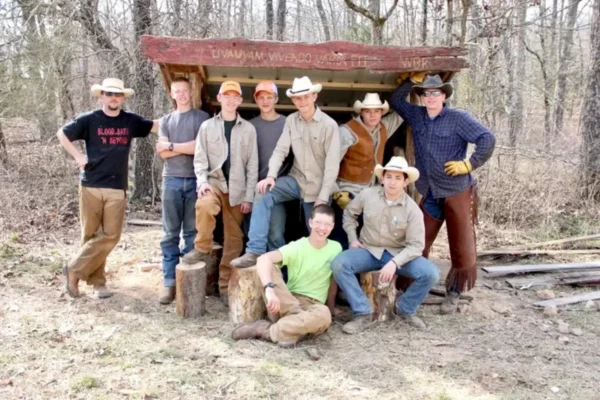
Chores teach boys that work becomes lighter when people carry it together. At Whetstone, boys learn to complete their own responsibilities, but they also learn to notice when someone else needs help. An older boy may show a newer boy how to sweep properly. Someone may jump in to help finish dishes. A group may work together to reset a room after a meal.
We sometimes call that “hurdle help,” which is our phrase for coming alongside someone so they can get over the obstacle in front of them.
That matters because many boys who come to a boys ranch for troubled youth have learned survival habits that make teamwork difficult. They may isolate, blame, mock, manipulate, or quit. Chores give staff a practical way to teach a better pattern:
See the need.
Do your part.
Help the next guy.
Leave the place better than you found it.
This is the beginning of servant-leadership.
Not the fancy version from conference brochures. The real version. The version with crumbs under the table.
Chores Teach Humility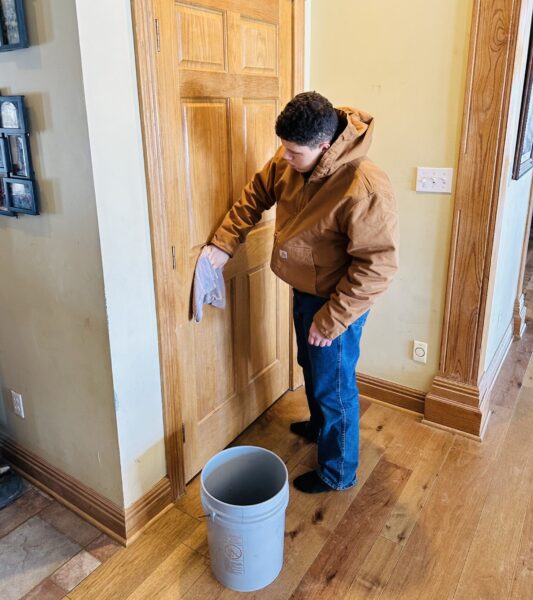
Most boys do not arrive asking for more opportunities to scrub things.
This will shock no one.
But there is something deeply formative about doing ordinary work without being the center of attention. Chores push against entitlement. They remind a boy that he is part of a household, not the emperor of a private emotional kingdom.
In a healthy home, everyone contributes.
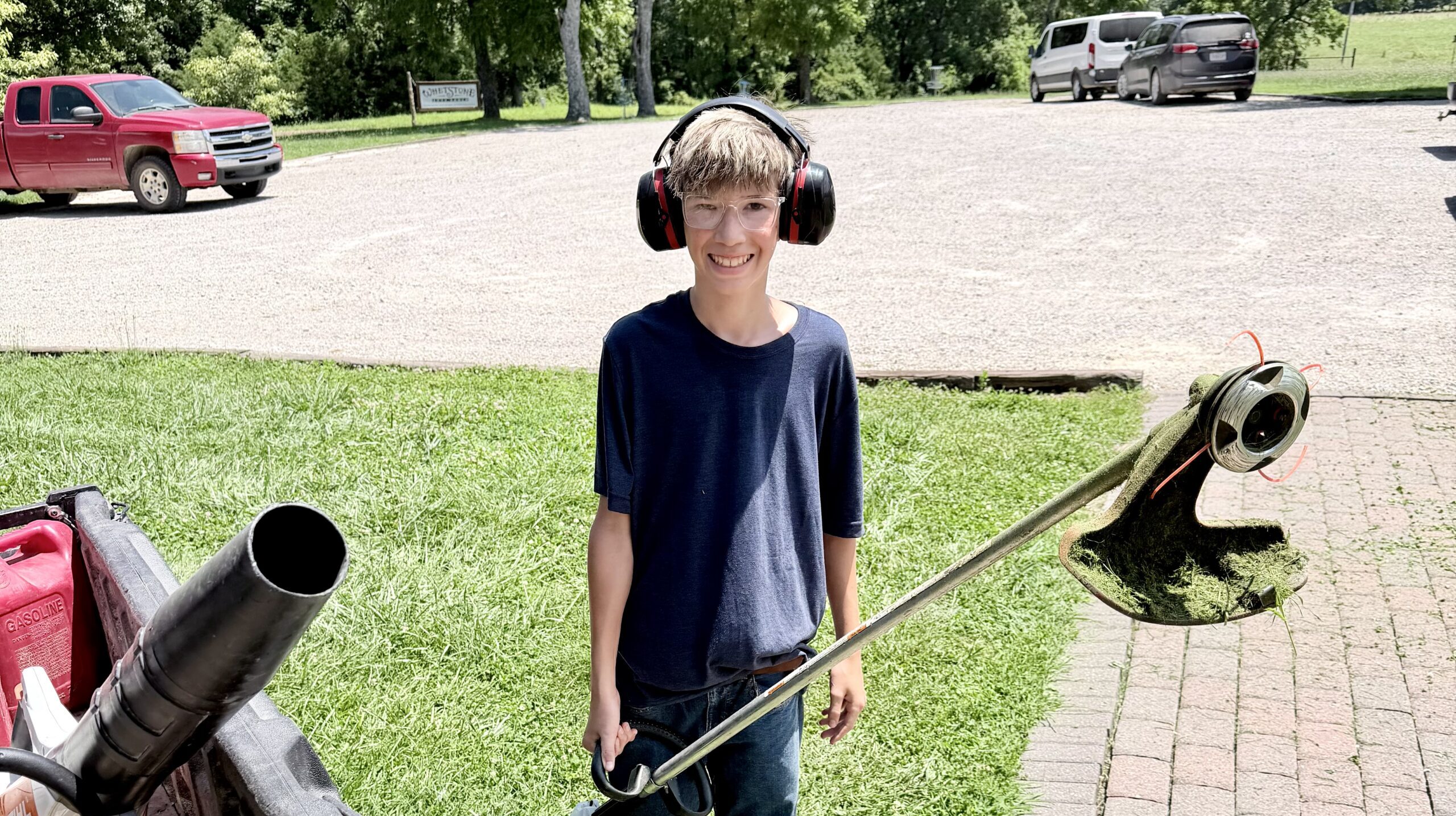
At Whetstone, this is built into the daily rhythm. Boys clean after meals. They keep rooms and common spaces orderly. They participate in work projects. They care for animals and outdoor spaces. They learn that responsibility is not punishment. It is preparation.
This is one important difference between a therapeutic program and what many people imagine when they search for a boot camp for troubled kids. Whetstone is not built around fear, intimidation, or punishment. It is not a military-style boot camp. It is a Christian therapeutic boys ranch where structure, counseling, mentorship, academics, outdoor adventure, and work are integrated to help boys grow from the inside out. Whetstone itself explains that a therapeutic boys ranch focuses on healing rather than punishment. (Whetstone Boys Ranch)
Discipline matters. Consequences matter. But the goal is not to break a boy.
The goal is to sharpen him.
Chores Reveal What Is Underneath
Sometimes a boy refuses to clean his room, and it looks like laziness.
Sometimes it is laziness.
We do not need to pretend every sock on the floor is a trauma response. Sometimes a sock is just a sock, lying there in open rebellion.
But sometimes the refusal is connected to something deeper. Control. Shame. Depression. Anger. Learned helplessness. Attachment struggles. A long history of adults giving up, blowing up, or disappearing.
This is why a therapeutic setting matters.
At Whetstone, staff can respond to the behavior while also paying attention to the heart beneath it. A boy who refuses chores may receive consequences. His level progress may be affected. He may need extra work or closer accountability. But he may also need a conversation. He may need help naming what is really happening.
That is the advantage of a relational, therapeutic environment. The chore becomes a window.
Not always a pleasant window. Sometimes the window has fingerprints and possibly peanut butter on it.
But a window nonetheless.
For families comparing a youth group home, a program for misbehaved kids, or a school for troubled teens, this distinction matters. The best programs do not merely enforce compliance. They use daily life to uncover patterns, teach skills, and build trust.
Chores Prepare Boys to Return Home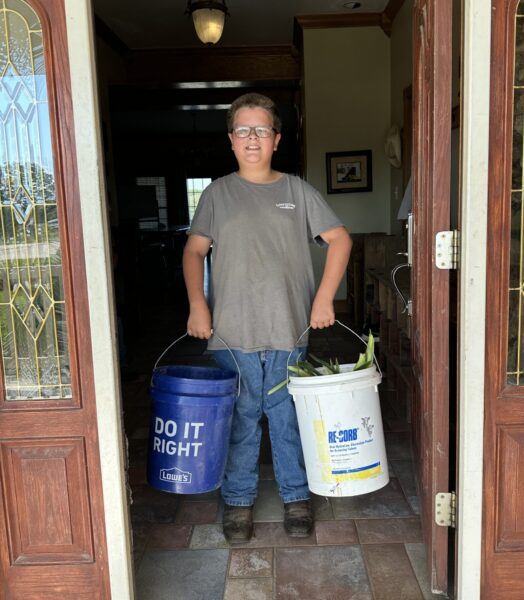
One of the clearest signs of growth is when a boy begins to carry new habits back into family life.
Many parents have told us that after time at Whetstone, their son is more willing to help after dinner, clean up after himself, or participate in household responsibilities with less argument than before. He often does it automatically, without even being asked which is a huge change from the pre-Whetstone days.
Now, he may not do it perfectly. He may not load the dishwasher exactly the way you like it. (Heck, I can’t even do that, and I’ve been married for 30 years.) We are, afterallk, working with teenage boys, not enchanted forest creatures.
But growth shows up.
It shows up when a boy pushes back his chair and helps clear the table.
It shows up when he notices the trash is full.
It shows up when he makes his bed without requiring a courtroom drama.
It shows up when he begins to understand that living in a family means contributing to the family.
For parents, this can feel small and enormous at the same time. Because the chore itself may be simple, but the pattern behind it is not. A boy who learns to participate in a household is learning to re-enter relationship.
That is why Whetstone’s work is not just about boys. It is about families. The purpose is reconciliation, restoration, and preparing boys to return home with the tools they need to live differently.
Chores Are Part of a Bigger Program
Chores alone will not heal a struggling boy.
A broom is not a licensed counselor. A dishwasher does not offer EMDR. A chicken coop, though emotionally honest in its own way, is not a complete treatment plan.
At Whetstone, chores are one piece of a larger therapeutic environment that includes counseling, academics, spiritual mentorship, outdoor adventure, physical activity, family work, and daily staff investment. Boys live, learn, work, and grow in a setting designed to help them become responsible young men and servant-leaders.
You can learn more about the full Whetstone program, the academic structure, and the hands-on ranch work described on Whetstone’s About Us page.
But chores deserve their place in the story.
Because a boy who learns to sweep a floor may also be learning to pay attention.
A boy who learns to wash a dish may also be learning to serve.
A boy who learns to clean up after himself may also be learning that his choices affect other people.
A boy who learns to care for small things may be preparing to care for larger things – his education, his body, his work, his family, his future, his faith.
The Clean Machine and the Kingdom of God
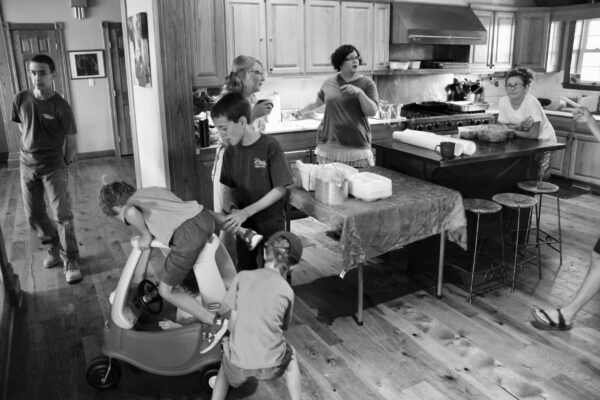
There is an old Liimatta family phrase I like: “The Clean Machine.”
It came from those moments when our house of eight had finally reached the outer edge of civilized society. Six kids, two parents, and enough shoes, cereal bowls, laundry, toys, crumbs, and mysterious sticky spots to start our own archaeological dig.
My mom was often overworked and under-appreciated, barely surviving at times, though she usually made exhaustion look like patience. That was when my dad would sense the moment had come. He would slip back into his army days, ham it up, and rally the troops.
He’d bark orders playfully, put on the Annie soundtrack, and suddenly we weren’t just kids cleaning the house. We were orphans in a Broadway work camp, singing “It’s the Hard Knock Life” while Miss Hannigan ordered us around.
The kids scattered. One grabbed dishes. One picked up toys. One hauled laundry. The youngest mostly spun in circles until redirected. The mess began to retreat. And somehow, what could have been drudgery became almost fun.
Almost.
That is part of the secret. Work does not have to be joyless to be meaningful. Structure does not have to be cold to be effective. Correction does not have to be cruel to be firm.
We thought we were play-acting, but we were also doing something important: helping my mom, restoring order, and learning that work feels lighter when everybody joins in.
At Whetstone Boys Ranch, chores are one of the ordinary ways boys are invited into a better kind of life. A life with order. Contribution. Responsibility. Service. Stewardship. Purpose.
It is not flashy.
It is not complicated.
But then again, most true things are not.
Sometimes the path toward healing starts with therapy.
Sometimes it starts with a hard conversation.
Sometimes it starts with a father and son learning to trust each other again.
And sometimes, strange as it sounds, it starts with a broom turned the right direction.
Because even the floor can become holy ground when a boy is learning how to become a man.
Looking for Help for Your Son?
If your family is searching for a therapeutic boarding school, program for troubled boys, Christian boys ranch, or a healthier alternative to a boot camp for troubled kids, Whetstone Boys Ranch may be able to help.
Learn more about Whetstone Boys Ranch or explore our therapeutic boarding school program for boys.
NOTE: This blog was adapted from an episode of A Time to Sharpen, the Whetstone Boys Ranch podcast for parents seeking wisdom, hope, and practical guidance for raising struggling teen boys.
Listen to the full episode below.